Onsite security management faces the same hassles that any other IT services have -- they are a pain to manage! The more you give your IT staff to manage, the greater the chance that something might be missed, creating a cybersecurity loophole. There is also the ever present threat of user’s own unsecured devices being... Continue Reading →
Sophos Router Web Interface Configuration
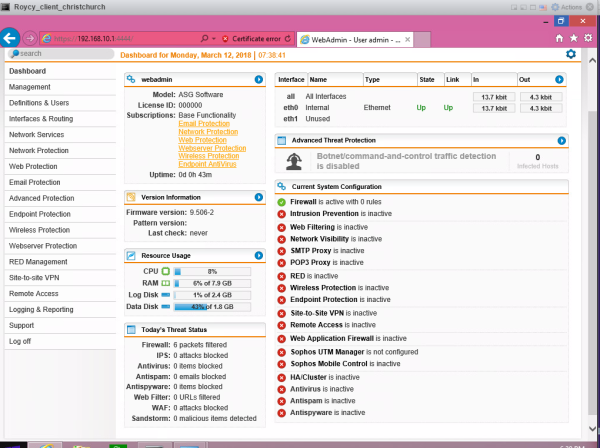
Set up a firewall policy By default, the firewall blocks all non-essential connections. Therefore you must configure the firewall before you protect your computers. 1. In the Policies pane, right-click Firewall, and click Create Policy. A New Policy is added to the list, with its name highlighted. Type the name that you want to use... Continue Reading →
Sophos Router Installation
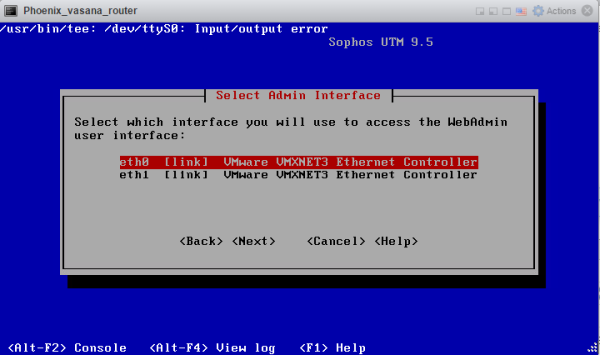
Sophos UTM 9.4 is one of the first Sophos products to offer our advanced next-gen cloud sandboxing technology. Sophos UTM is easy to use, thanks to the configurable real-time dashboard, flexible modular licensing, and intuitive reusable network object definitions. Installing Sophos helps to: ■ Create computer groups. ■ Set up security policies. ■ Search for... Continue Reading →
Business Continuity Planning
Business continuity planning is one of the core responsibilities of the information security profession. Business continuity efforts are a collection of activities designed to keep a business running in the face of adversity. This adversity may come in the form of a small-scale incident such as a single system failure, or a catastrophic incident such as an earthquake or tornado. Business continuity plans may... Continue Reading →
Qualitative and Quantitative Risk Assessment
Quantitative Assessment Quantitative assessment deals with numbers and dollar amounts. The quantitative assessment process involves the following three steps: Estimate potential losses (SLE)—This step involves determining the single loss expectancy (SLE). SLE is calculated as follows: Single loss expectancy x Asset value = Exposure factor Items to consider when calculating the SLE include the physical... Continue Reading →
Risk Management
Risk management is the act of determining what threats your organization faces, analyzing your vulnerabilities to assess the threat level, and determining how you will deal with the risk. Some of the major parts of risk management include identifying threats and vulnerabilities and determining how you will deal with the risk. The following definitions are... Continue Reading →
Basic Audit of AWS Environment – Cloud Watch

Auditing Cloud Watch Metrics and Alarms Amazon CloudWatch is a monitoring service for AWS cloud resources and the applications you run on AWS. You can use Amazon CloudWatch to collect and track metrics, collect and monitor log files, set alarms, and automatically react to changes in your AWS resources. Amazon CloudWatch can monitor AWS resources... Continue Reading →
Basic Audit of AWS Environment – VPC
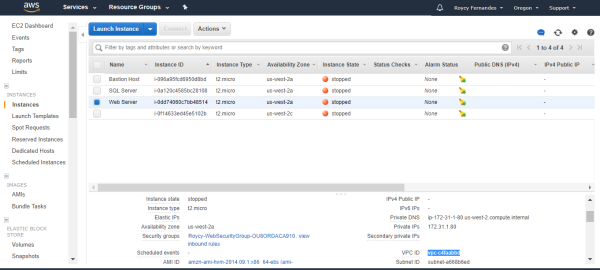
Review Amazon VPC Security Configuration Amazon Virtual Private Cloud (Amazon VPC) enables you to launch Amazon Web Services (AWS) resources into a virtual network that you've defined. This virtual network closely resembles a traditional network that you'd operate in your own data center, with the benefits of using the scalable infrastructure of AWS. Security groups... Continue Reading →
Basic Audit of AWS Environment – EC2
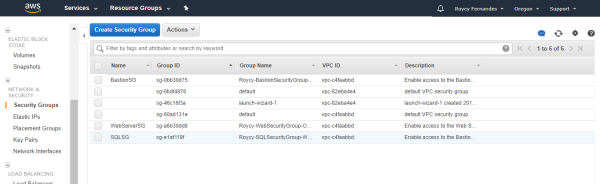
Security Configuration of Amazon Elastic Compute Cloud (EC2) Instances Amazon Elastic Compute Cloud (Amazon EC2) is a web service that provides resize-able computing capacity—literally, servers in Amazon's data centers—that you use to build and host your software systems By default, security groups allow all outbound traffic. You can't change the outbound rules for an EC2-Classic security... Continue Reading →
Basic Audit of AWS Environment – IAM

Auditing User Permissions in IAM An audit gives you an opportunity to remove unneeded IAM users, roles, groups, and policies, and to make sure that your users and software have only the permissions that are required. Periodically audit your security configuration to make sure it meets your current business needs. Use the IAM Policy Simulator to test... Continue Reading →

